
Company check by name or tax ID in seconds.
A serious company hands it over without blinking. It is on the invoice, on the website, in every contract.
Hesitation over a ten-second question says more than any pitch. And if they give it, a check that takes seconds shows you who you are talking to.
60 checks included · cancel anytime
“What is your registration number?” Four possible answers.
- They give it straight away. Normal, on to the check.
- They send it by email. Also normal: just wait until it arrives.
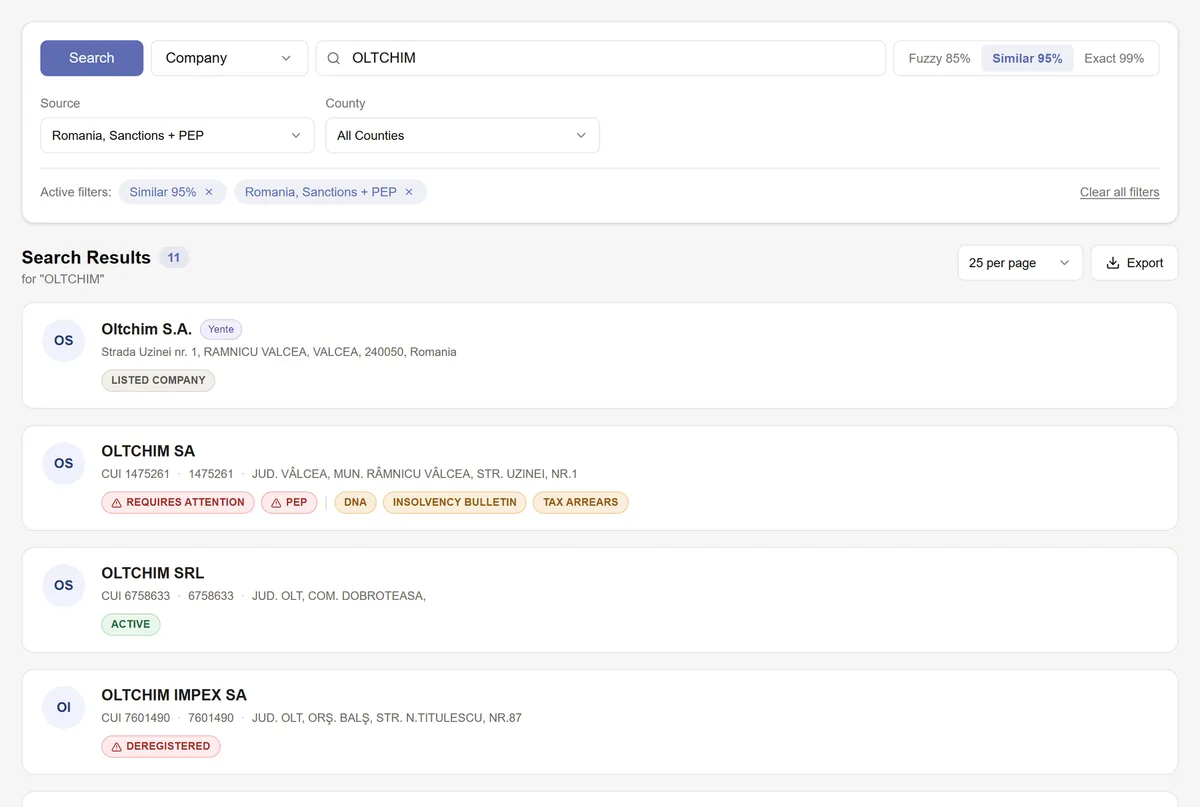
- They give a name, not a number. Search by name, but confirm it is the same company.
- They dodge the question. You have your answer before checking anything.
A registration number is not sensitive. It is the public identifier, printed on every invoice.
One code, a full profile.
Whether they pay
Outstanding obligations and published incidents.
ANAF · BPIWhether they litigate
Court cases, with subject and stage.
Portal.JustWho is behind it
Shareholders, directors, age, capital.
ONRCWhat the report looks like.
What comes back once you have found the company: the full profile, every section with its source.
Frequently asked questions.
Yes. Search works by name or by registration number. The number stays the safer route, because companies with near-identical names are more common than you would think. Once you pick from the list, the report confirms the number, the registered office and the directors, so you know you are looking at the right company.
Look them up by name. The number is public anyway and appears on every invoice, on the website and in every contract. Refusing a ten-second question is an answer in itself, but it does not block you: you do not need their consent to consult a public register.
Yes. The public sources are re-queried every day, and a company profile updates as the registers publish changes. Each section of the report states the moment it reflects, so you always know how fresh the information is.
Nothing stops abruptly: credits are topped up inside the platform, and if you keep hitting the limit you move to a larger plan: Basic carries 400 credits, Pro 800. One credit is one check and is spent only when you actually run one, so the cost follows real activity.