
Company check by name or tax ID before you invoice.
Tax debt, court cases, insolvency and ownership: one lookup by name or registration number, in seconds.
The information is public, but scattered across five portals. We put it on one screen, refreshed daily.
60 checks included · cancel anytime
What the contract does not show.
- Current tax debt, social contributions especially.
- Cases opened by other suppliers over unpaid invoices.
- Insolvency or payment incidents published in the bulletin.
- A director with struck-off or insolvent companies behind them.
Six answers, one lookup.
Tax standing
Outstanding obligations to the state budget.
ANAFCourt cases
Open litigation, subject and stage.
Portal.JustInsolvency
Proceedings published in the bulletin.
BPIOwners and UBOs
Who owns and who runs the company.
ONRCAge and accounts
How long it has existed and what it files.
ONRCFilings
Registered office, director, activity.
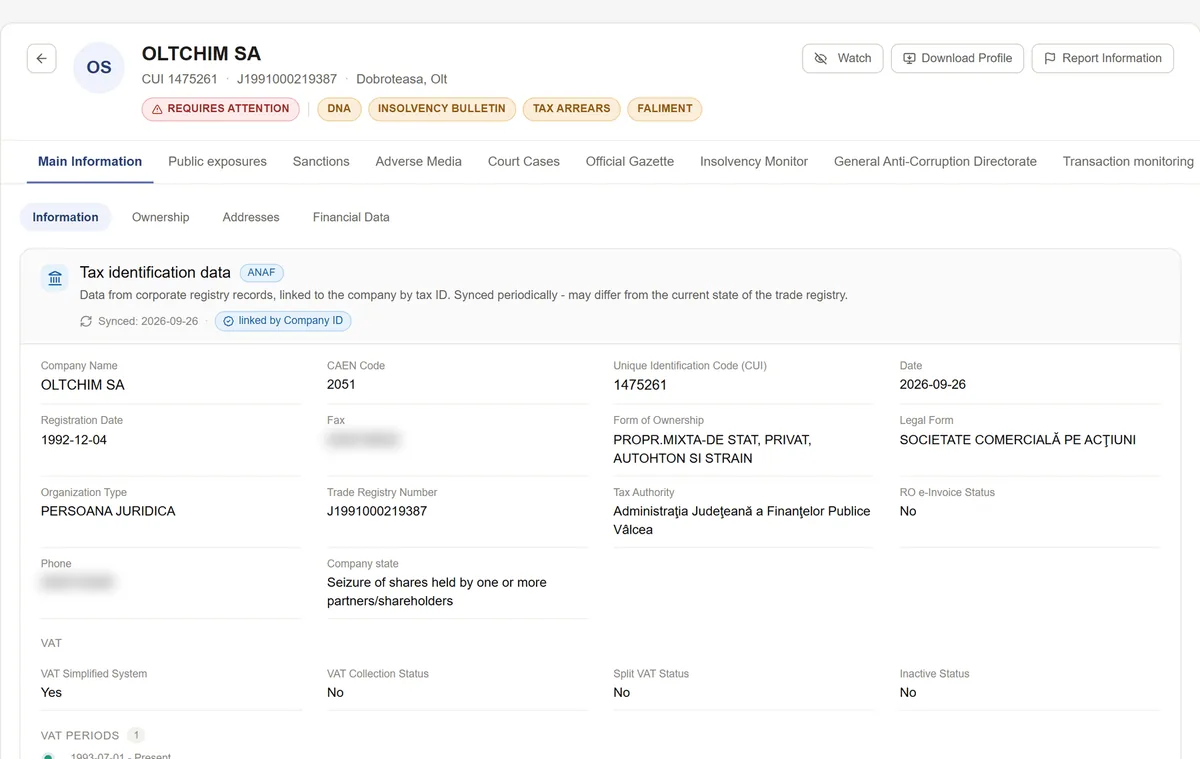
Official GazetteWhat the report looks like.
The same page for any company: every section states which register it comes from and what date it reflects.
Frequently asked questions.
An open case is not a verdict: large companies always have litigation. What matters is the type and the pattern: insolvency petitions filed by creditors, several suits over unpaid invoices, the same dispute repeated with different suppliers. The report gives you the subject and the stage of each case, so you can tell the difference.
Yes. The public sources are re-queried every day, and a company profile updates as the registers publish changes. Each section of the report states the moment it reflects, so you always know how fresh the information is.
Nothing stops abruptly: credits are topped up inside the platform, and if you keep hitting the limit you move to a larger plan: Basic carries 400 credits, Pro 800. One credit is one check and is spent only when you actually run one, so the cost follows real activity.