
Supplier check before you choose.
Most checks find nothing. That is exactly why they are useful.
The same sources and the same criteria, applied to everyone on the list, not just to the one who gave you an odd feeling.
60 checks included · cancel anytime
Three dimensions, identical for everyone.
Payment discipline
Outstanding obligations and published incidents.
ANAF · BPIHistory of conflict
One dispute is normal; a pattern is not.
Portal.JustStructural stability
Age, capital, changes of director.
ONRCThe same rules for every candidate.
Check everyone
Applied selectively, a check is an opinion. Applied to all, it is a criterion.
Write down what you found
The same fields for every company: debt, litigation, insolvency, age.
Ask before deciding
An open case often has a good explanation. Worth hearing in time.
What the report looks like.
The same sections for every candidate, so you compare like with like.
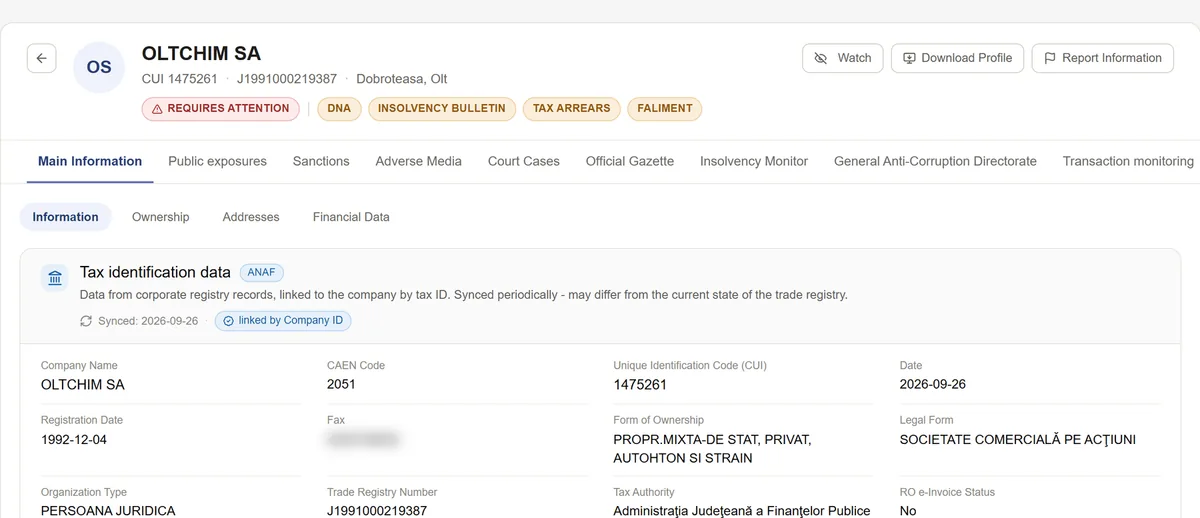
Frequently asked questions.
Yes. 60 checks means 60 companies, not 60 lookups about one. That is exactly why it makes sense to run the whole shortlist through the same criteria rather than only the one that gave you an odd feeling.
That is the normal case, not the exception. You are not looking for the company with nothing on it, but for the one whose signals you understand: a stale old filing is not the same thing as an insolvency petition filed last month. The report gives you the stage and the date, so you can compare like with like.
Yes. The public sources are re-queried every day, and a company profile updates as the registers publish changes. Each section of the report states the moment it reflects, so you always know how fresh the information is.
Nothing stops abruptly: credits are topped up inside the platform, and if you keep hitting the limit you move to a larger plan: Basic carries 400 credits, Pro 800. One credit is one check and is spent only when you actually run one, so the cost follows real activity.
Clear Data checks legal entities. Checking natural persons follows separate rules under GDPR.