
Employer check before you sign.
An employer not paying social contributions already has a liquidity problem. It is public.
The same registers show whether it pays on time, whether former employees are suing, and whether insolvency has been opened. One lookup before the final round.
60 checks included · cancel anytime
What you can see before you sign.
- Tax debt, social contributions especially.
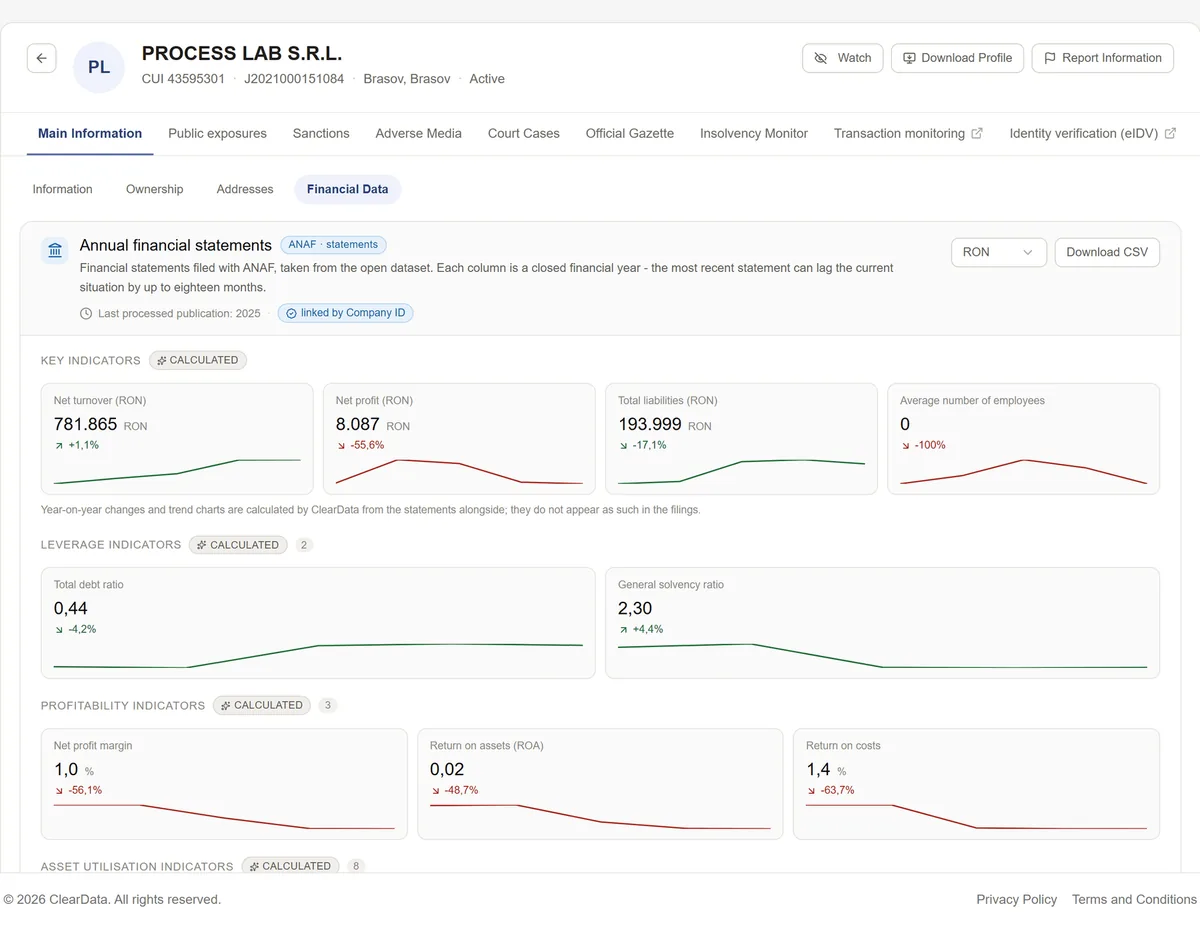
- Two consecutive loss-making years in the filed accounts.
- A shrinking headcount, however the interview describes growth.
- Court cases opened by former employees.
- Payment incidents or insolvency published in the bulletin.
None is a reason to refuse the offer. Together they tell you what to ask in the final round.
Three sections that matter for a salary.
Payments to the state
What is outstanding, and for how long.
ANAFEmployment litigation
Cases opened by former employees, with their stage.
Portal.JustFinancial health
Accounts, net result, headcount, insolvency.
ONRC · BPIWhat the report looks like.
The public signals about an employer, each with its source and its date.
Frequently asked questions.
Yes. Everything comes from official public registers, published precisely so that anyone can consult them, not from internal sources and not from employees’ personal data. You are checking a legal entity, not people.
The ones that repeat. One month of late contributions happens; debt that grows month after month, two consecutive loss-making years, headcount falling and employment cases opened by former colleagues: together they say something that none of them says alone.
Yes. The public sources are re-queried every day, and a company profile updates as the registers publish changes. Each section of the report states the moment it reflects, so you always know how fresh the information is.
Nothing stops abruptly: credits are topped up inside the platform, and if you keep hitting the limit you move to a larger plan: Basic carries 400 credits, Pro 800. One credit is one check and is spent only when you actually run one, so the cost follows real activity.