
Your own company check by name or tax ID.
A case closed but still visible. A filing you never noticed. A registered office three years out of date.
Your company's public profile writes itself, out of what the tax authority, the trade register, the courts and the Official Gazette publish. Nobody tells you when it changes.
60 checks included · cancel anytime
Small things with a large effect on an analysis.
- An old case, settled since, but still visible.
- A published filing you never noticed.
- A registered office or site left stale for years.
- A small tax obligation left open through an error.
- Accounts filed late, or missing.
None of it stops you trading. All of it appears in the profile a large client reads before signing.
The same sources, read in your favour.
Tax standing
What shows as outstanding, and since when.
ANAFLitigation
What stays publicly visible after a case closes.
Portal.Just · BPIStructure and filings
Shareholders, office, capital, published changes.
ONRC · Official GazetteWhat the report looks like.
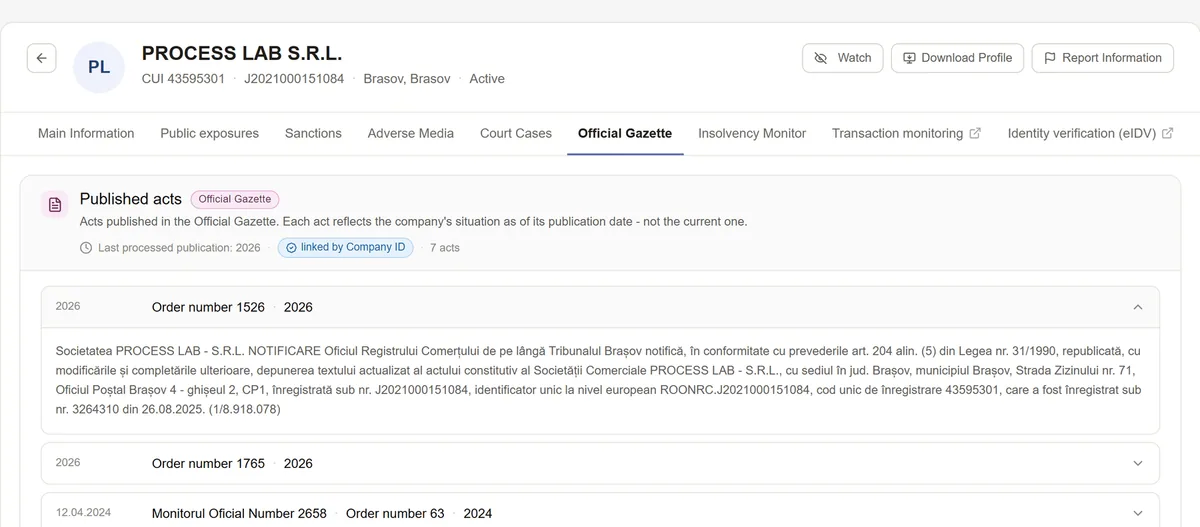
What the registers say about your company, section by section, each with the date it reflects.
Frequently asked questions.
Because the courts portal does not delete cases once they are decided: they stay public, parties and subject included. Anyone looking quickly sees “this company has litigation” without reading the stage. The report gives you the stage of each case, so you know which of them still say anything about you today.
Yes. The public sources are re-queried every day, and a company profile updates as the registers publish changes. Each section of the report states the moment it reflects, so you always know how fresh the information is.
Nothing stops abruptly: credits are topped up inside the platform, and if you keep hitting the limit you move to a larger plan: Basic carries 400 credits, Pro 800. One credit is one check and is spent only when you actually run one, so the cost follows real activity.